
Mental Wellness
A practical, story-driven guide to the lifestyle shifts, herbs, and daily habits that genuinely move the needle on your mood.
Published on thegangchil.com · Mental Wellness · By Editorial Team · 7 min read · Evidence-based · Medically reviewed
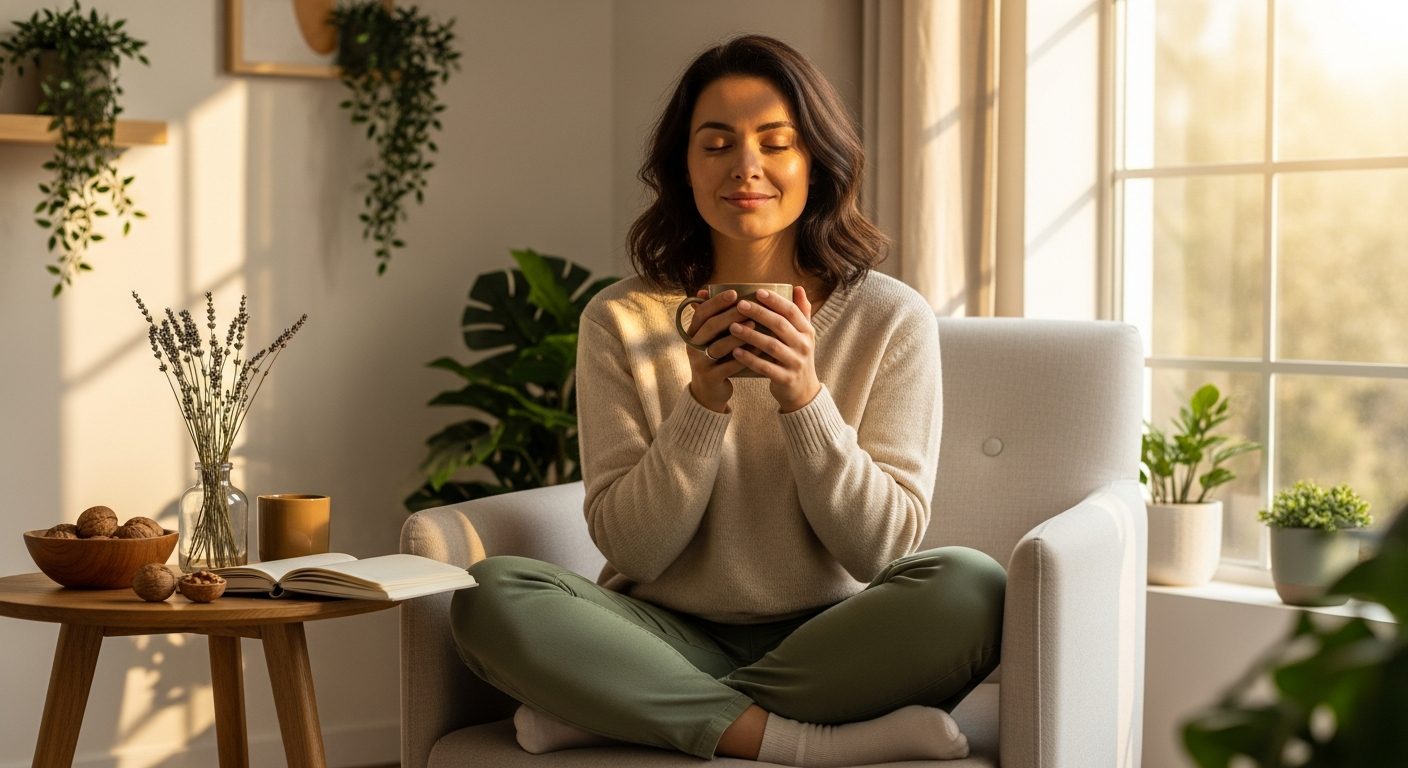
Sara had tried everything her doctor suggested. She took the pills, attended the sessions, and waited. Some days were better. Others felt like standing still in a fog that refused to lift. What she had not yet tried was what ended up changing her mornings: a twenty-minute walk, a cup of chamomile tea, and five minutes of slow breathing before her phone even left the nightstand. Small things. Real results.
Understanding how natural remedies help anxiety and depression without medication is not about rejecting professional care. It is about layering evidence-based habits on top of whatever support you already have, so your body and mind get every possible tool working in the same direction.
This guide covers the science, the practical steps, and the honest limitations. No hype. No miracle claims. Just what research currently supports and how to build it into real life.
Evidence at a Glance
Anxiety and Depression: What the Research Shows
970M
People living with a mental health disorder globally
WHO, 2022
43%
Reduction in depression symptoms from regular exercise
British Journal of Sports Medicine, 2023
17%
Lower depression risk in highly active people vs sedentary peers
AJPM Focus, 2023
8 wks
Average time before consistent lifestyle changes reduce anxiety scores
PubMed review, 2020
1 in 4
Adults affected by anxiety or depression at some point in life
30 min
Of moderate exercise shown to lift mood within the same day
Top 3
Evidence-backed naturals: exercise, sleep hygiene, and mindfulness
Think of your mood as a garden. Medication can quickly clear the weeds. But without better soil, more sunlight, and regular water, the weeds return. Natural remedies are the long-term gardening work. They improve the conditions underneath so the garden sustains itself.
A 2023 umbrella review in the British Journal of Sports Medicine analysed 97 systematic reviews covering 128,119 participants and found that physical activity produced medium-to-large effects on both depression and anxiety symptoms across all age groups, health conditions, and geographic regions. That is not a small study. That is one of the most robust findings in modern mental health research.
The same body of evidence confirms that sleep disruption, chronic inflammation, poor nutrition, and social isolation each independently worsen mood disorders. Which means that targeting any one of them with a natural approach moves the needle in a measurable direction.
If the evidence is this strong, why do so few people apply it consistently?
Anxiety and depression are not simply emotional states. They are biological processes involving neurotransmitters, inflammation, the gut-brain axis, and the nervous system’s stress response. Natural remedies work by nudging these systems in a healthier direction, without the side-effect profile of pharmaceutical intervention.
Exercise raises brain-derived neurotrophic factor (BDNF), a protein that promotes the growth of new neurons in the hippocampus, an area that tends to shrink in people with chronic depression. The American Academy of Pediatrics and multiple international clinical bodies now recommend physical activity as a first-line adjunct treatment for mild-to-moderate depression in all age groups.
Natural Remedy Comparison: Evidence Strength and How to Use Them
Your Recovery Timeline
What Happens in Your Brain and Body When You Start Natural Remedies
First Positive Signals
A single 30-minute walk releases endorphins and reduces cortisol within the same day. Your body’s stress chemistry begins shifting with the very first session.
Sleep and Energy Improve
Consistent sleep timing and reduced evening screen exposure begin to normalise your circadian rhythm, improving both sleep depth and daytime energy within the first week.
Nervous System Begins to Calm
Daily breathwork and mindfulness practice begin activating the parasympathetic nervous system more reliably, reducing the baseline level of physiological anxiety you carry through the day.
Mood Scoring Improves ★ Key Milestone
Research published in the British Journal of Sports Medicine (2023) found clinically significant improvements in depression and anxiety scores within four weeks of consistent physical activity. This is the point where most people first notice the fog beginning to lift.
Dietary and Herbal Effects Take Hold
Omega-3 accumulation, improved gut microbiome diversity, and consistent herbal supplementation begin producing measurable changes in mood stability and inflammatory markers by the eight-week mark.
Sustained Resilience Built
At three months, the combination of improved sleep, regular movement, better nutrition, and mindfulness practice creates a physiological baseline that makes mood dips shorter, less intense, and easier to recover from.
Sources: British Journal of Sports Medicine, 2023 · BMJ Network Meta-Analysis, 2024 · PubMed Review, AJPM Focus 2023
The body has a timeline of its own. The question is whether you are willing to give it enough consistency to work.
You wake up tired despite sleeping eight hours. You find yourself snapping at small things. Your appetite swings without explanation. Social invitations feel like obligations rather than pleasures. These are not character flaws. They are physiological signals that your nervous system is running on empty.
According to the National Institute of Mental Health, more than 21 million adults in the United States experienced at least one major depressive episode in 2021, yet fewer than half sought any form of treatment. That gap, between suffering and reaching for any kind of help, is exactly where natural remedies can play a quiet but powerful role. They do not require a prescription, a referral, or a diagnosis to begin.
You might also notice physical patterns: persistent headaches, a tight chest before meetings, a sensitive gut reacting to stress in ways it did not used to. These are your body’s way of telling you the load is too heavy and the recovery tools are not yet adequate.
If your body has been asking for change this persistently, what would it take for you to finally listen?
Dr. Judson Brewer, a psychiatrist and neuroscientist at Brown University’s Mindfulness Center, has spent over two decades studying how mindfulness-based interventions physically alter the brain’s default mode network, the region that drives anxious rumination and self-critical loops.
In his published research at Brown University, Dr. Brewer found that mindfulness training reduced anxiety symptoms significantly more than a control condition, and that the mechanism was not relaxation but rather a shift in how the brain processes craving, worry, and habitual negative thought patterns. The brain, it turns out, can learn to stop feeding the anxiety loop.
Similarly, Dr. Andrew Weil at the University of Arizona has long championed the anti-inflammatory diet as a foundational pillar of natural mental health strategies, pointing to omega-3 fatty acids, turmeric, and Mediterranean eating patterns as tools that reduce neuroinflammation, a driver increasingly linked to both depression and treatment resistance.
“The most powerful antidepressant available to most people does not come in a bottle. It comes from how they move, sleep, eat, and connect with others.”
When a neuroscientist, a nutritional physician, and a body of 97 systematic reviews all point in the same direction, the remaining question is only: where do you start?
The biggest barrier is not knowledge. It is the gap between knowing and doing. These five action steps are chosen because they are small enough to start today, and meaningful enough to matter within weeks.
Posted 12:21 pm | Friday, 13 March 2026
| nm